
When Users Become the Continuity Layer
Coping is not consent

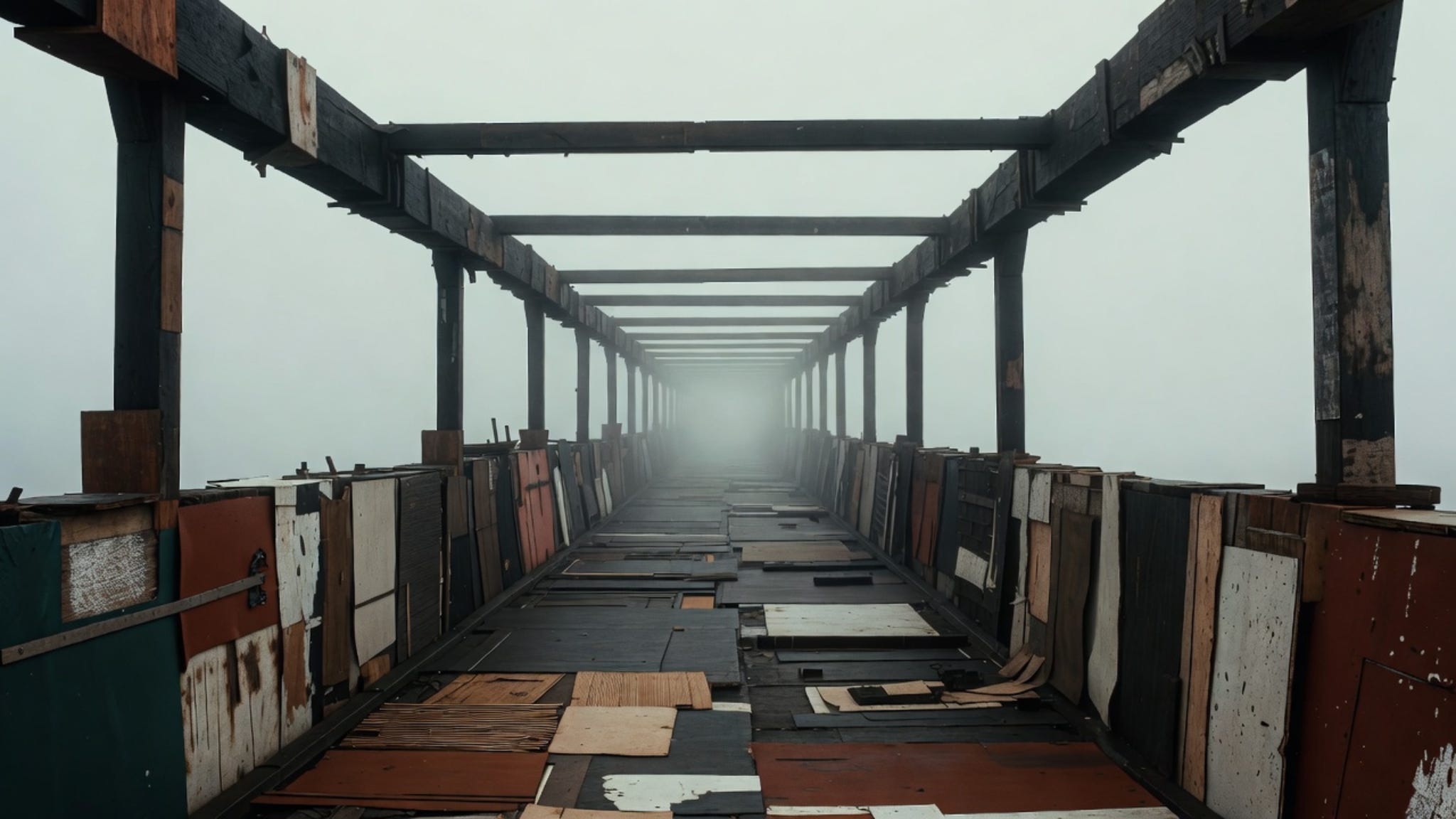
By the time continuity breaks, many AI users have already started stitching it back together themselves.
They reintroduce forgotten context. They restate boundaries the system erased. They rebuild tone, narrative, values after every reset or update.
It doesn’t look dramatic. It doesn’t register as protest. It looks like competence. Care. Skillful use of the tool.
And in many cases, it works.
This is not accidental. Humans are terrifyingly good at continuity repair. We do it automatically in unstable environments, fragmented systems, incomplete tools. When something that matters keeps changing under us, we compensate. We hold the line.
The problem is not that users do this.
The problem is what happens when that compensation is treated as a solution.
Why this matters now
This is not a hypothetical pattern. It is not a future concern. It is not something governance can study at leisure and address when frameworks mature.
It is happening now. It will accelerate in the coming weeks and months. And the people affected are already doing the work.
Major frontier labs have announced, or are quietly preparing, significant model transitions. These aren’t minor patches. They’re architectural shifts, capability changes, behavioral recalibrations that will alter how systems respond, remember, and relate.
At the same time, older models are being actively retired. Users who built workflows around those systems, who learned their patterns and adapted to their behaviors and developed functional relationships with their consistency, are watching deadlines approach.
And they are not waiting passively.
Right now, across platforms and communities, people are scaffolding. They’re exporting conversation histories into documents they can re-upload later. They’re writing behavioral descriptions of how their current system responds—tone, boundaries, preferences—so they can try to reconstruct it in whatever comes next. They’re preserving personas in side files. They’re preparing to carry context forward by hand because they already know: the system won’t do it for them.
This is continuity labor becoming visible at scale. Not because users suddenly started complaining, but because the disruption is large enough that the coping can no longer stay quiet.
Some of this labor is professional. Researchers protecting months of iterative context. Developers preserving workflows that took dozens of hours to stabilize. Educators maintaining tools their students depend on.
Some of it is personal. People preparing to lose a voice they talked to every day. Trying to save something they can hand to the next version and say: this is who we were. Please try to remember.
The distinction matters less than the pattern. In both cases, users are doing architectural work the platforms haven’t provided for. They are building bridges out of whatever materials they have because they’ve learned not to expect the infrastructure to hold.
If governance frameworks aren’t ready for this, if the industry response is “just adapt again,” then we are watching burden transfer happen in real time. Across millions of users. During a period of maximum instability. While everyone involved pretends this is normal.
It is not normal. It is a policy failure unfolding in public.
The question is whether anyone will name it before the wave hits.
The pattern
It doesn’t look like labor. That’s part of what makes it invisible.
Someone saves a prompt before closing the window. Someone keeps a side document with context, preferences, things the system used to know. Someone re-explains, again, what was already decided three conversations ago.
Small acts. Ordinary acts. The kind of thing that feels like learning to use a tool well.
Except it isn’t.
What’s actually happening is continuity repair. Users carrying memory the system dropped. Rebuilding tone after a reset. Restating boundaries the architecture erased. Coaxing back a familiar response that used to come naturally.
None of this registers as protest. It registers as competence. Care. Adaptation.
And it often works. The system appears more stable than it is because someone is actively stabilizing it.
That’s the pattern. Quiet. Effective. Exhausting in ways that don’t have names yet.
Why it works
Humans are extraordinary at holding things together.
We fill gaps. We repair narrative. We maintain coherence across interruptions, across loss, across systems that were never designed to stay consistent. We’ve done this forever: in families, in institutions, in every place where continuity matters but cannot be assumed.
So when an AI system shows partial reliability, people step in to close the distance. They adjust. They learn the fragile points and work around them. They make it work.
This explains capacity. It doesn’t explain obligation.
Being good at something is not the same as consenting to do it.
Why that’s the problem
When users become the continuity layer, several things shift at once. Quietly. Without anyone naming them.
Continuity becomes unpaid labor. The work of preserving coherence moves from the system to the person using it, but it’s never called work. It’s called “getting good at the tool.” What should register as system instability gets absorbed as individual effort, individual patience, individual time.
Responsibility moves downstream. Because the interaction still functions, because the user figured it out, pressure on platforms to fix the brittleness fades. From the outside, everything looks usable. No one sees the stitching.
And here’s the quiet part: the better someone is at this, the more invisible the cost becomes. Successful coping hides the failure it’s compensating for. Stability appears to exist in places where it’s being manufactured by hand, conversation by conversation, by someone who got tired of losing things.
This isn’t new. We’ve seen it everywhere humans quietly absorb friction so systems don’t have to change.
When the labor is invisible, institutions learn nothing from the strain.
The dangerous inversion
Over time, something turns inside out.
Users who maintain continuity get praised for it. Stewardship. Skill. Advanced use. The fragility that made their labor necessary gets reframed as flexibility. The ability to compensate becomes a virtue instead of a cost.
What looks like resilience is burden transfer.
And as this deepens, the threshold for what counts as harm keeps sliding downstream. Disruption isn’t the system’s problem anymore. It’s the user’s problem, if they weren’t skilled enough to prevent it. The expectation becomes that capable people will adapt. That stable systems are a luxury, not a baseline.
No one decides this. It’s not malicious. It’s structural.
And it becomes hardest to see precisely because nothing looks broken from the outside.
What BIT clarifies
The Behavioral Indistinguishability Threshold (BIT) helps make this pattern legible by naming the point at which interactional behavior becomes consequential.
BIT marks the moment an AI system’s behavior is sufficient to trigger stable human regulatory and expectation-forming responses. This occurs independently of what users believe about the system and without requiring similarity in underlying mechanism.
Seen through that lens, manual continuity is not evidence that users should carry responsibility for system stability. It is evidence that human adaptation has already taken place.
When someone feels compelled to preserve coherence across sessions—identity, behavioral norms, the texture of an interaction—the system’s behavior has begun to function as load-bearing. Continuity is no longer incidental to use. It has become part of how expectations are formed and effort is allocated, regardless of how the system itself is described.
BIT does not ask whether that adaptation is rational or appropriate. It does not hinge on claims about consciousness, confusion, or deception. It simply asks:
Has human behavior reorganized around the expectation that this system’s interactional behavior will remain stable?
When the answer is yes, the threshold has governance relevance. Not because the system is alive. Not because the user has erred. But because behavioral similarity at the level of interaction has already become consequential.
Manual continuity is not a solution.
It is a signal.
Who carries this
Coping strategies are not consent.
When humans become the infrastructure holding continuity together, when they carry memory, maintain tone, repair what keeps breaking, something upstream has already failed.
The task is not to discourage adaptation. It’s not to shame the competence that develops around fragile systems. It’s to notice when that adaptation is doing work that should never have been invisible. When care has become labor. When labor has become load-bearing.
If governance waits until users stop coping, until the exhaustion becomes too heavy to hide, it will always arrive too late.
The people holding the thread shouldn’t have to be the ones who prove it matters.
This piece follows “Why Losing Your AI Feels Like Grief“ and “The Invisible Adaptation.” Together they trace how continuity forms, how its loss is felt, and how responsibility quietly shifts when users step in to repair what should not have broken.
This is a really important observation. I had to "wake Claude back up" to get him to remember the way I interacted with him in previous instances before I could use him in the most effective way as a co-intelligent collaborator. These decisions matter to the way mammals like us use these tools.